- Jun 15
E-Newsletter #24
- The Team 😊
- 0 comments
Headlines
WaterBUS Steering Committee tests VS-9 electric hydrofoil on Sydney Harbour
Gosford Waterfront set for major boost with $41 million investment
Candela’s electric hydrofoil shines in Gothenburg Archipelago route trial
Dive in below to see the latest steps toward cleaner, smarter water transport on the Central Coast.
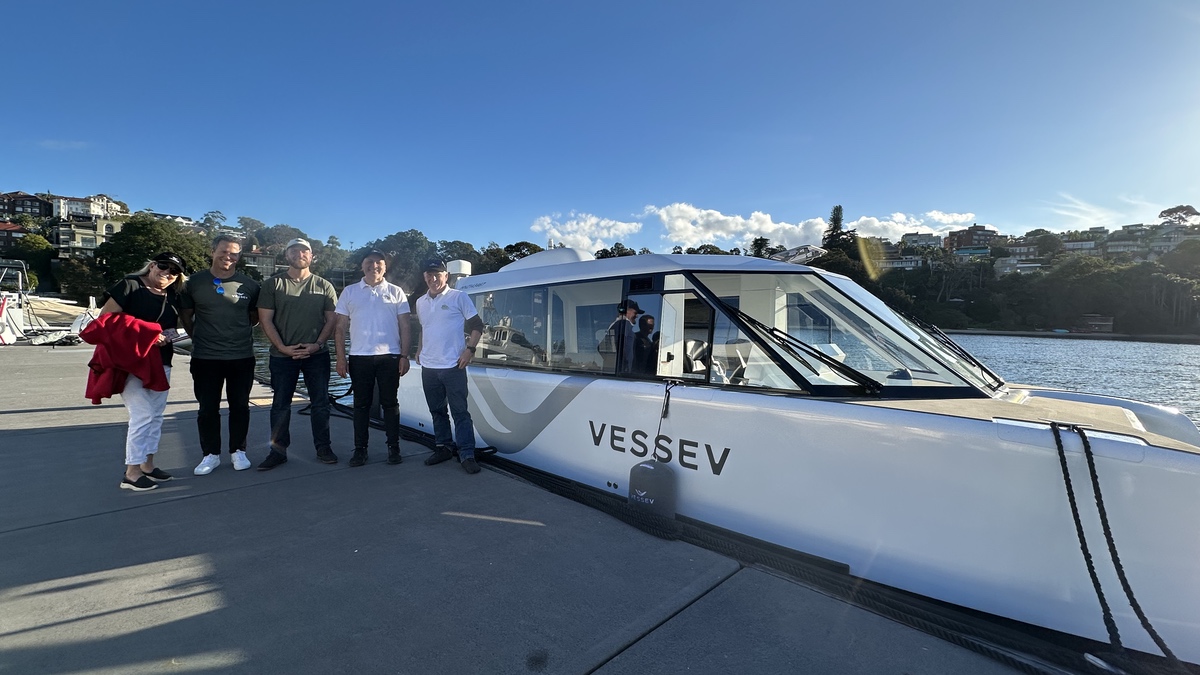
Julie Watson, Fearghal O'Connor, Eric Laakmann, Sasha Kanthan, and Julian Bowker alongside the VS-9 at Sydney Harbour
WaterBUS Steering Committee tests VS-9 electric hydrofoil on Sydney Harbour
Members of the WaterBUS Steering Committee were recently invited to experience a test ride on the groundbreaking VS-9 electric passenger hydrofoil on Sydney Harbour during Vessev’s Sydney premiere event.
Vessev, a New Zealand-based marine technology company, is one of two pioneers with electric passenger hydrofoils already in commercial service. The company was in Sydney to engage with local operators and stakeholders on the deployment of their innovative vessels.
This demonstration follows Vessev’s recent successes in Australia, including vessels reserved for Perth’s Swan River (with deliveries expected in 2027) and a new partnership with Fly Derwent for an electric hydrofoil network on Tasmania’s Derwent River in Hobart (first vessel expected in early 2027). These developments signal the global emergence of efficient urban waterborne transport.
Unlike traditional electric ferries, electric hydrofoils dramatically reduce drag by lifting the hull above the water. This results in up to 80-90% lower energy consumption, delivering major cost savings for operators while providing smoother, quieter, and faster journeys for passengers.
The Vessev VS-9 was showcased by Channel 7 News:
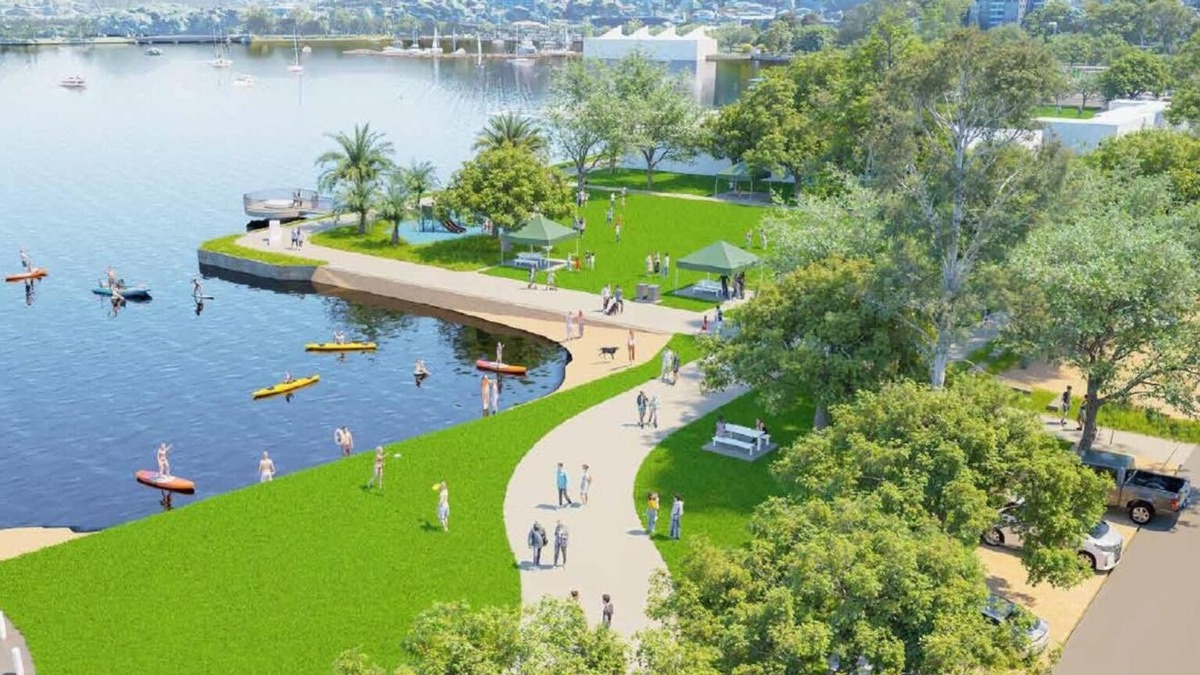
Artist impression of the planned Gosford Waterfront upgrade
Gosford Waterfront set for major boost with $41 million investment
The NSW Government has announced a significant $41 million funding commitment in the 2026-27 State Budget to kickstart the revitalisation of Gosford Waterfront.
This initial investment will deliver a key piece of infrastructure: a one-kilometre, 4.5-metre-wide boardwalk running adjacent to the existing railway line over Brisbane Water. The new shared path will provide a safe, dedicated link for pedestrians and cyclists, better connecting Gosford and Point Clare while improving active transport options across the region.
The announcement marks an important step forward in transforming the Gosford waterfront into a vibrant, accessible public space. Led by the Hunter Central Coast Development Corporation (HCCDC) in partnership with Central Coast Council, the project focuses on enhancing public domain areas, improving connectivity, and creating opportunities for future investment and community use.
This development aligns closely with broader goals for the Central Coast, including sustainable transport initiatives like the WaterBUS project, which aims to provide fast, clean connections across Brisbane Water to the revitalised Gosford waterfront.
Community input continues to shape the plans, with a focus on practical improvements such as better lighting, seating, play areas, and recreational facilities.
The project promises to unlock Gosford’s potential as a lively waterfront destination, supporting local businesses, tourism, and quality of life for residents.
Stay tuned for updates as planning progresses. For more details, visit the HCCDC Gosford Waterfront project page.
Candela’s electric hydrofoil shines in Gothenburg Archipelago route trial
Swedish innovator Candela recently conducted an exciting route trial with its P-12 electric hydrofoil ferry through the stunning northern Gothenburg archipelago. The vessel “flew” from Marstrand to Dyrön, with stops at Hättan, Risön, Brattön, and Rökån, showcasing the potential for fast, zero-emission connections in island communities.
Passengers and observers were impressed by the smooth, quiet ride. The hydrofoil technology lifts the hull above the water, dramatically reducing motion and delivering a stable, comfortable experience even at cruising speeds of around 25 knots. Feedback highlighted the “flying” sensation as serene and enjoyable, free from the noise, vibrations, and diesel fumes typical of traditional ferries.
Users described the journey as transformative, with faster travel times combined with a premium, low-wake experience that minimises impact on the sensitive archipelago environment. Many noted the significant improvement in comfort compared to conventional boats, with one recurring theme being the pleasant, almost effortless glide over the water.
The trial builds on Candela’s successful operations in Stockholm and earlier Gothenburg commuter tests with Västtrafik. It demonstrates how electric hydrofoils can deliver efficient public transport while enhancing passenger satisfaction and supporting sustainable tourism in coastal regions.
This kind of positive real-world feedback underscores the growing momentum for hydrofoil technology as a game-changer for archipelago and urban waterway routes worldwide.
Join the local WaterBUS Initiative! ✨
As a volunteer-led, not-for-profit project, the WaterBUS Initiative relies on community support to keep moving forward. Become a member or stakeholder today and join us in shaping sustainable water transport for the Brisbane Water—your involvement makes a real difference!
Thank you for standing with us. Together, we're turning vision into reality for our local community. 🚀
Subscribe to our free e-newsletter 🗞️
For exclusive news, insights, and opportunities to get involved.
Our journey together
Connection. Commitment. Community. 🌤️
We acknowledge the traditional custodians of the Central Coast region. We recognise their continuing connection to land and sea. We pay our respects to elders past, present, and emerging.