- Jul 7, 2025
E-Newsletter #15
- The Team 😊
- 0 comments
Transport plan drafted for the Central Coast
Transport for NSW recently released their Draft Central Coast SRITP for public review and are now requesting feedback by the 27th July 2025. The SRITP includes the Draft Plan, the Early Engagement Report, a Story Map, and engagement resources, all accessible via their website haveyoursay.nsw.gov.au ⧉.
Strategic Regional Integrated Transport Plans (SRITP) represent the NSW Government’s commitment to delivering tailored regional transport plans that contextualise the State’s objectives and outline a targeted program of initiatives for each region’s unique needs.
The Draft Plan is the transport response to the Department of Planning, Housing and Infrastructure’s Central Coast Regional Plan 2041 and the central focus remains on the transport experience.
This supports the safe and seamless movement of people and goods on roads, public transport services, point to point transport, on-demand services, community transport, and walking and cycling.
We are pleased to see the integration of our submission from last year with Initiative 41:
Investigate opportunities and feasibility for improvements and additions to ferry services in the Central Coast, including ferries to Gosford and potential longer-term opportunities for service improvements to Woy Woy, Tuggerah Lake and Budgewoi Lake, and between Ettalong and Palm Beach.
Thank you to everyone who joined our 2024 community consultation and everyone who contributed to the Central Coast’s Strategic Regional Integrated Transport Plan. Your input shapes our region’s future!
If you have not already done so, please review the Draft Plan and share your thoughts at Have Your Say ⧉.
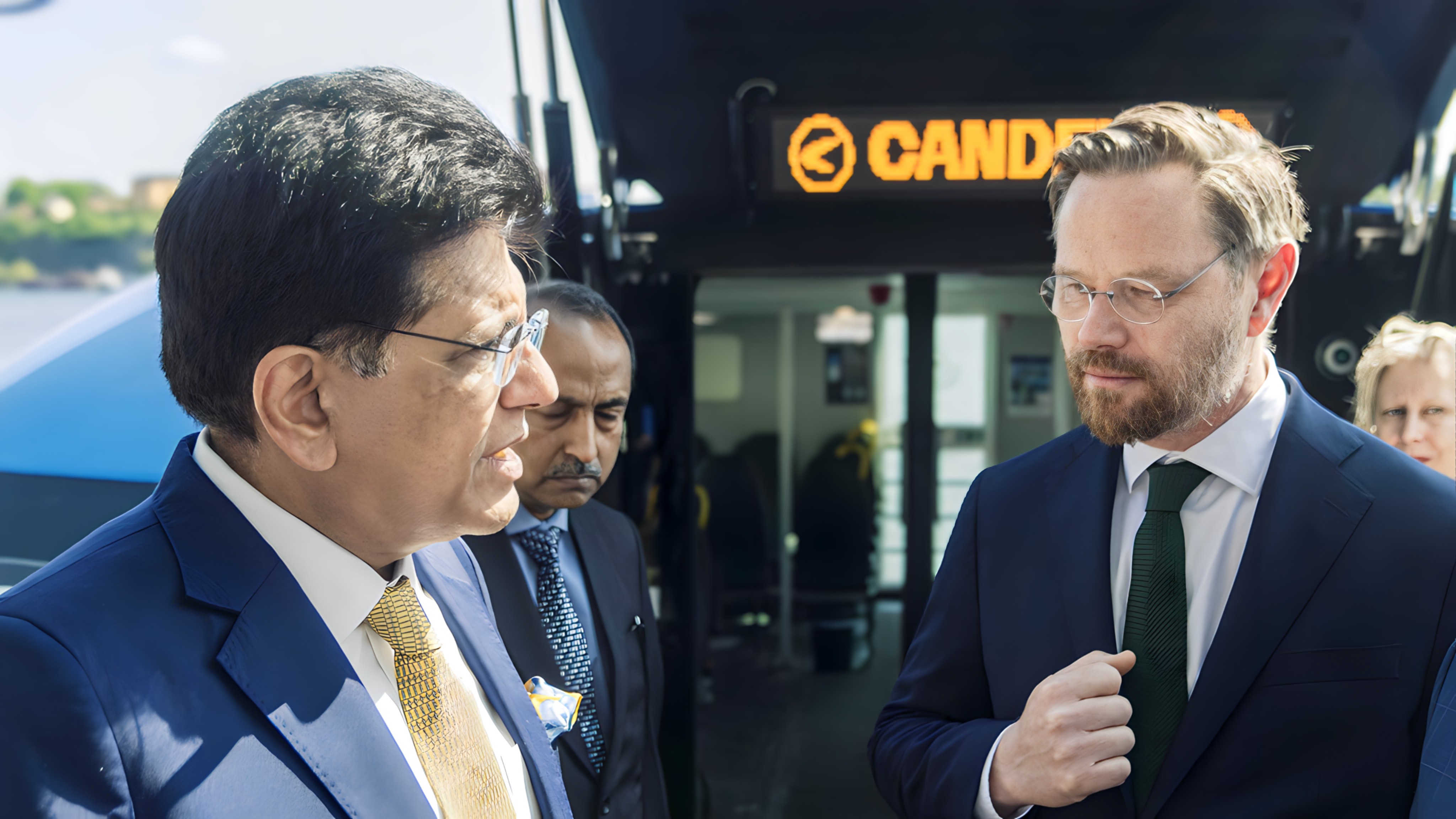
India's Minister of Industry and Supply, Mr Piyush Goyal, with mr Gustav Hasselskog, CEO and founder of Candela, on board a Candela P-12 in Stockholm, June 2025.
Mumbai’s Electric Hydrofoil Ferries: A blueprint for the Brisbane Water
Mumbai, India’s bustling financial capital, is taking a bold step toward transforming urban commuting with the introduction of the world’s largest fleet of electric hydrofoil ferries. Ordered by JalVimana, a Mumbai-based transport operator, eleven Candela P-12 ferries will soon glide across the city’s waterways, leveraging cutting-edge hydrofoil technology to lift the vessels above the water’s surface, reducing drag and energy consumption by up to 80% compared to traditional ferries. This initiative, backed by the Maharashtra government, aims to turn Mumbai’s underutilised coastline into high-speed, eco-friendly transport arteries, offering a sustainable solution to the city’s notorious traffic congestion. With a population exceeding 23 million, Mumbai is setting a global precedent for how coastal megacities can rethink mobility.
The Candela P-12 ferries will initially serve two of Mumbai’s busiest routes: from the Gateway of India to Alibaug and Elephanta Island, slashing travel times from 2-3 hours by car to under 30 minutes by water. A third route is also in development to connect the upcoming Navi Mumbai airport with South Mumbai, cutting a 90-minute car journey to less than half an hour. These “flying boats” use computer-controlled hydrofoils to achieve a cruising speed of 25 knots (46 km/h), providing a smooth, quiet, and zero-emission ride that aligns with India’s push for sustainable coastal development. JalVimana’s CEO, Niraj Thakur, hailed the P-12 as a “giant leap” for Mumbai, emphasising its role in reducing air pollution and easing pressure on the city’s overburdened road and rail networks.
For the Brisbane Water, Mumbai’s ambitious project offers inspiration for our own waterbus service. While the Central Coast may not face Mumbai’s scale of congestion, integrating electric hydrofoil ferries could provide faster, greener links between Gosford and surrounding areas, reducing reliance on cars and enhancing the commuter experience. As Mumbai paves the way for a global shift toward clean waterborne transport, the WaterBUS team is eager to explore how similar innovations could elevate our service and contribute to a sustainable future for the Central Coast.
Introducing Regional Development Australia Central Coast (RDACC)
Brisbane Waters WaterBUS is proud to support Regional Development Australia Central Coast (RDACC) in advocating for our vibrant region.
As part of a national network of 53 committees, RDA Committees are active facilitators in their communities, with a clear focus on growing strong and confident regional economies that harness their competitive advantages, seize on economic opportunity, and attract investment.
RDACC aligns its efforts with the Australian Government’s Regional Investment Framework, investing in people, places, and services to ensure sustainable development. Whether it’s boosting tourism, enhancing transport, or supporting local jobs, RDACC’s work strengthens the Central Coast’s future.
To learn more about their initiatives or explore collaboration opportunities, visit www.rdacc.org.au ⧉.
What's next for July 2025? ✨
This month, we are providing feedback on the NSW Government's Draft Central Coast SRITP and drafting a policy proposal for a state-funded feasibility study supplemented by our business case.
If you have not already done so, please remember to share details of the waterbus project with family, friends, and colleagues.
Thank you for your continued support of the Brisbane Waters WaterBUS initiative. Together, we’re creating meaningful change for our community!
Subscribe to our free e-newsletter 🗞️
For exclusive news, insights, and opportunities to get involved.
Our journey together
Connection. Commitment. Community. 🌤️
We acknowledge the traditional custodians of the Central Coast region. We recognise their continuing connection to land and sea. We pay our respects to elders past, present, and emerging.